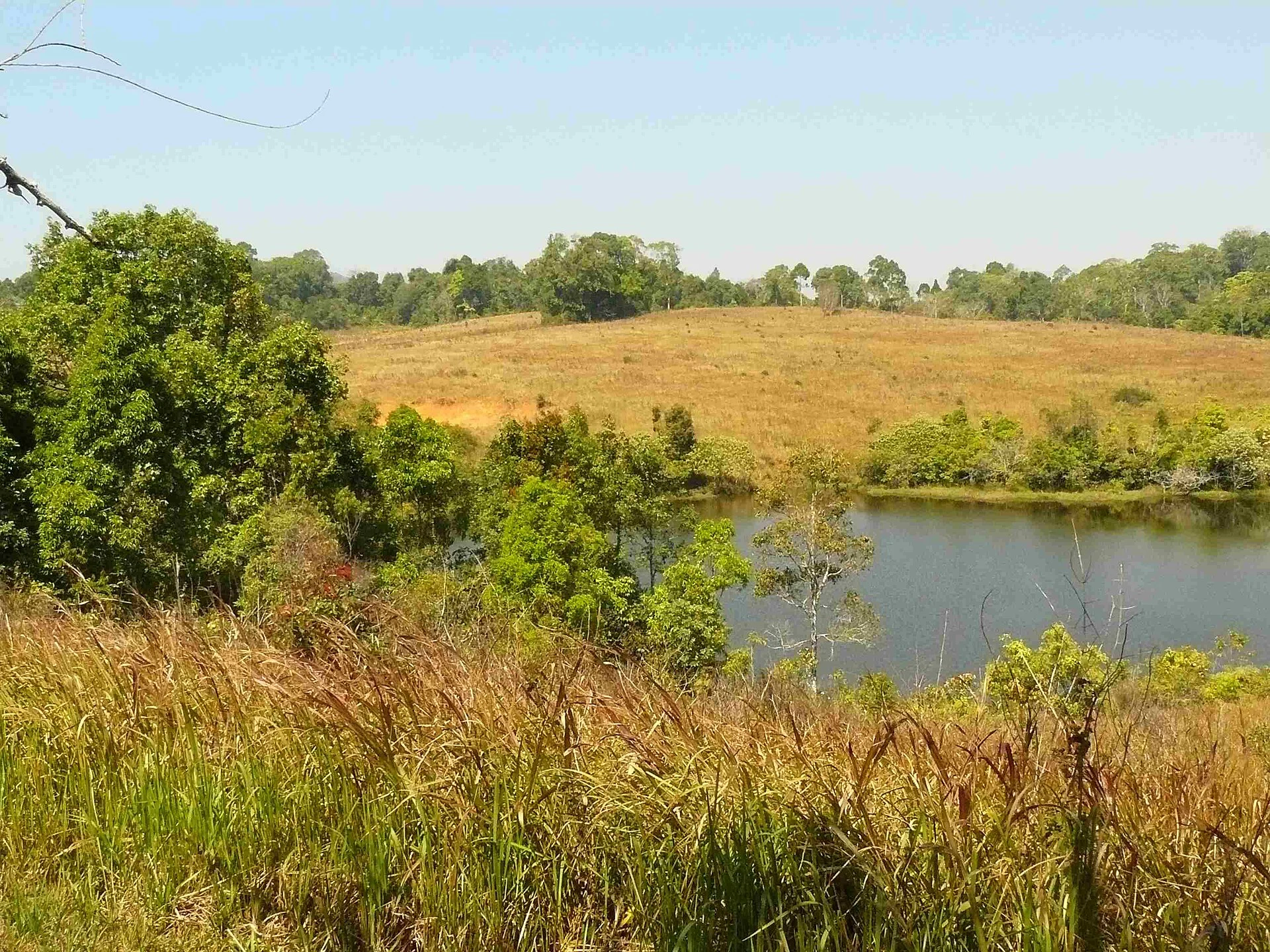

Khao Yai National Park is the heart of any trip to the region. It’s a vast landscape of evergreen forest, grassland and waterfalls where wild elephants still cross the road and hornbills fly over the canopy. This guide covers everything you need for a rewarding visit, from gate times and fees to the waterfalls, viewpoints, trails and wildlife worth planning around.
Overview
Established in 1962, Khao Yai was Thailand’s first national park. It covers about 2,166 square kilometres across four provinces, rises to 1,341 metres, and protects several distinct forest types. In 2005, it was inscribed as part of the Dong Phayayen–Khao Yai Forest Complex UNESCO World Heritage Site, recognised for its globally important biodiversity.
The park is home to more than 300 bird species and around 20 species of large land mammals, including a herd of wild Asian elephants estimated at roughly 200 to 250 animals, gibbons, sambar and barking deer, and four species of hornbill.
Highlights
- Waterfalls: Haew Narok, the park’s largest at about 150 metres, and Haew Suwat, famous from The Beach.
- Viewpoints: roadside lookouts and Pha Diao Dai near the summit of Khao Khiao. See our viewpoints guide.
- Wildlife: observation towers, dawn drives and ranger-run night spotlighting. See our wildlife guide.
- Trails: more than 50 km of trails, from short boardwalks to guided treks. See our nature trails guide.
Visitor information
| Gate hours | 06:00–18:00 |
|---|---|
| Tourist information | 08:30–16:30 |
| Entry fees | Charged per person per day, plus a vehicle fee. Foreign visitors pay more than Thai residents. See the official fee page. |
| Main entrances | Northern (Pak Chong) gate at the end of Thanarat Road, and the southern (Noen Hom) gate from Prachin Buri |
| Vehicle limits | Large, double-decker and tall vehicles are restricted. Small tour buses must use the Noen Hom gate. |
| Speed limit | 60 km/h, with many speed bumps |
| Fuel | No petrol stations inside the park |
Some viewpoints and trails close seasonally during the rainy season. In 2025, for example, viewpoints and the Pha Diao Dai trail were closed from 1 June to 30 September. Check the official website for current closures.
Best time to visit
- November–February (cool season): the most comfortable weather and clear mornings. Weekends are busy.
- March–April (hot season): fewer crowds, but some waterfalls run low.
- May–October (rainy season): lush forest, with waterfalls at their best from about June to August. Expect leeches on trails and possible closures.
At any time of year, the first hours after the gates open are best for wildlife and soft light.
Getting there and around
From Bangkok, drive north-east to Pak Chong, roughly three hours depending on traffic, then follow Thanarat Road to the northern gate. Trains and buses stop at Pak Chong, and from there you will need a taxi, driver or resort transfer. Inside the park, a car is by far the easiest way to get between sights, which can be up to 20 km apart.
A day route that works well: enter at 06:00, check the grasslands and observation towers for wildlife, visit Haew Suwat before the crowds, continue to Haew Narok, and finish at a viewpoint in the late afternoon before the gates close.
Safety and park etiquette
- Elephants have right of way. If you meet elephants on the road, stop, keep your distance, keep the engine running and never get out or try to pass close to them.
- Don’t feed macaques, and keep food out of sight.
- Don’t swim at waterfalls. Currents are strong and swimming is banned at major falls.
- Stay on marked trails, and hire a ranger guide for longer walks.
- Take your rubbish with you.
Where to stay nearby
Inside the park there are campsites, cabins and bungalows run by the park, and these must be booked in advance. Most visitors stay outside the park, in Mu Si and along Thanarat Road, for the shortest drive to the northern gate. Compare options in our where to stay guide, or see our pool villa resort guide for private villas close to the park.
Frequently asked questions
How many days do I need in Khao Yai National Park?
One full day covers the main waterfalls and a viewpoint. Two days lets you add a longer trail, a night drive and a second dawn visit for wildlife.
Can I see wild elephants?
Often, but not guaranteed. Sightings are most common along the main roads and near grasslands, especially early and late in the day.
Can I visit without a car?
Yes, with a tour or private driver from Pak Chong or your resort. Public transport inside the park is very limited.