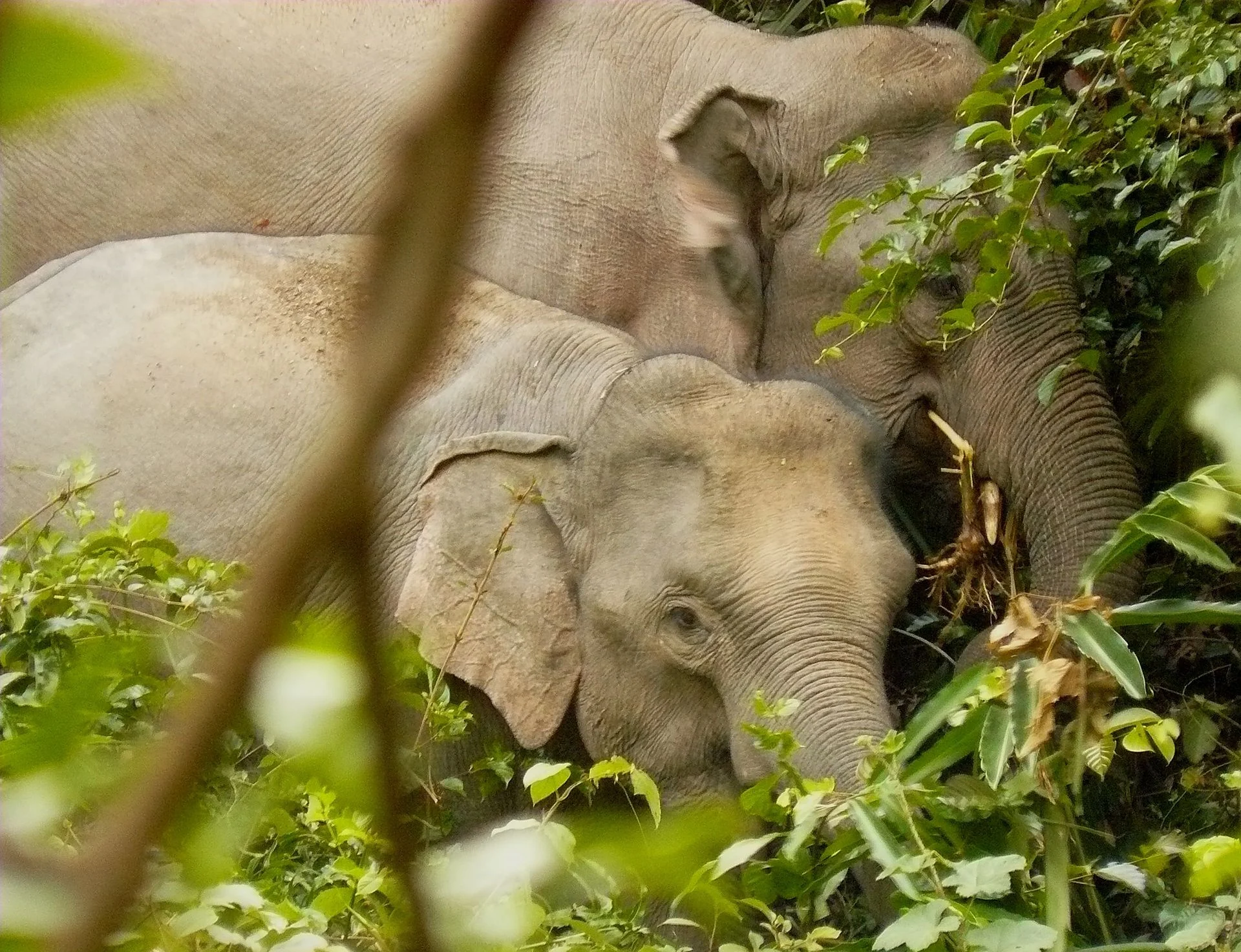

Few places within a few hours of Bangkok offer wildlife like Khao Yai. The park shelters wild Asian elephants, gibbons, four species of hornbill, sambar and barking deer, and more than 300 bird species. Here’s how to give yourself the best chance of memorable, responsible sightings.
What you might see
- Asian elephants: a herd estimated at roughly 200 to 250 animals. They are most often seen along the main roads and near grasslands, early and late in the day.
- Gibbons: white-handed gibbons are common, and their morning calls carry through the forest.
- Hornbills: great, wreathed and oriental pied hornbills, among others. Look for them near fruiting trees.
- Deer: sambar and barking deer, often at the grassland edges at dawn and dusk.
- Macaques: pig-tailed macaques are common along roads and at viewpoints.
- Night animals: civets, slow lorises and deer show up on night drives.
Best wildlife experiences
Dawn at the observation towers
Enter the park when the gates open at 06:00 and head to the grasslands. Observation towers such as the one at Nong Phak Chi overlook open ground where deer graze and elephants sometimes appear.
Ranger-run night spotlighting
Park rangers run night drives with searchlights, departing from the park headquarters in the early evening. Trucks are shared and can be booked at the accommodation office next to the visitor centre. Weekends get busy. Ask locally for current times and prices.
Guided forest walks
A ranger guide on the trails gives you the best chance of gibbons and hornbills. They will also point out signs of elephants and other animals. See our nature trails guide.
Bats at dusk
Just outside the northern gate, huge numbers of wrinkle-lipped bats stream out of a cave near Wat Tham Silathong around sunset. It’s a spectacular sight from the roadside. Do not enter the cave.
Responsible wildlife watching
- Elephants on the road: stop well back, keep your engine running, stay in the vehicle and let them pass. Never honk, chase or try to squeeze past.
- Never feed animals. Feeding makes macaques aggressive and can harm wildlife.
- Keep quiet and patient at towers and on trails.
- Use binoculars and a zoom lens rather than getting closer.
- Choose ethical experiences outside the park. Avoid elephant rides.
When to go
Wildlife is present year-round. The cool, dry season from November to February has comfortable conditions and good visibility at the grasslands, while the rainy season brings lush forest and active birdlife. At any time of year, the first and last hours of the day are best.
Where to stay
For dawn starts and evening night drives, stay as close to the northern gate as you can, in Mu Si or along Thanarat Road, or book park accommodation. See where to stay in Khao Yai and our family-friendly resorts, since wildlife is a highlight for children.
Sources: Rough Guides, Wikivoyage, UNESCO World Heritage Centre.